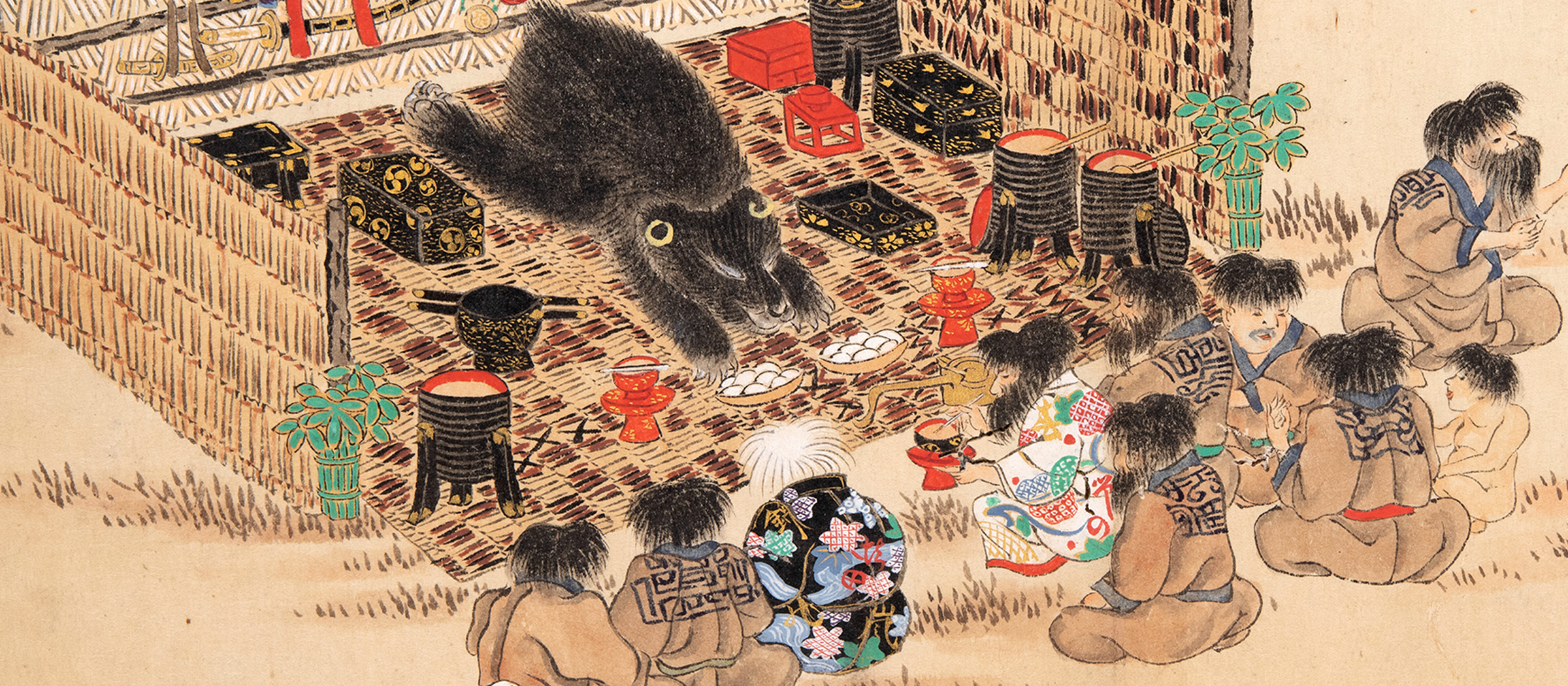
Mortar, Pestle, & Hammer
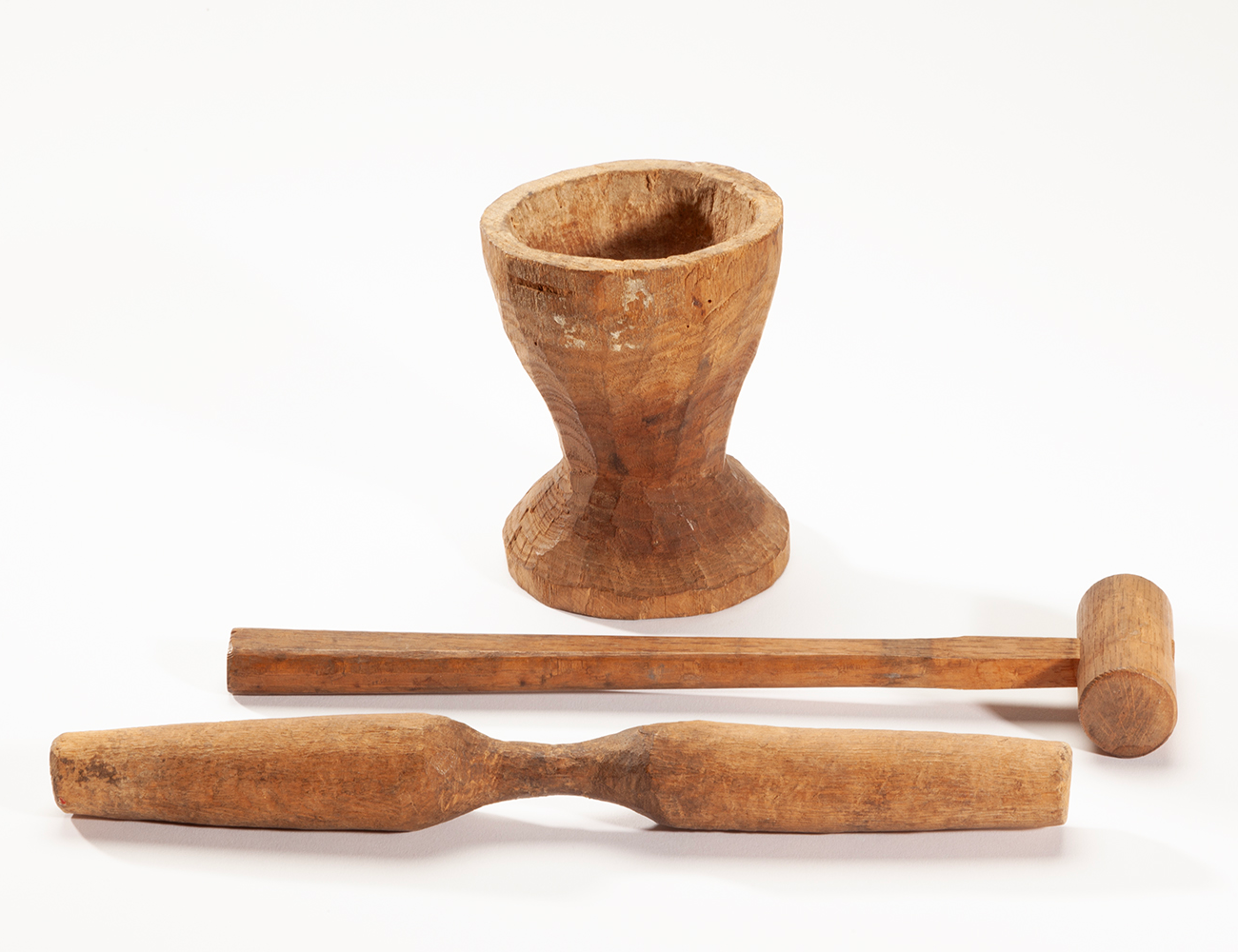
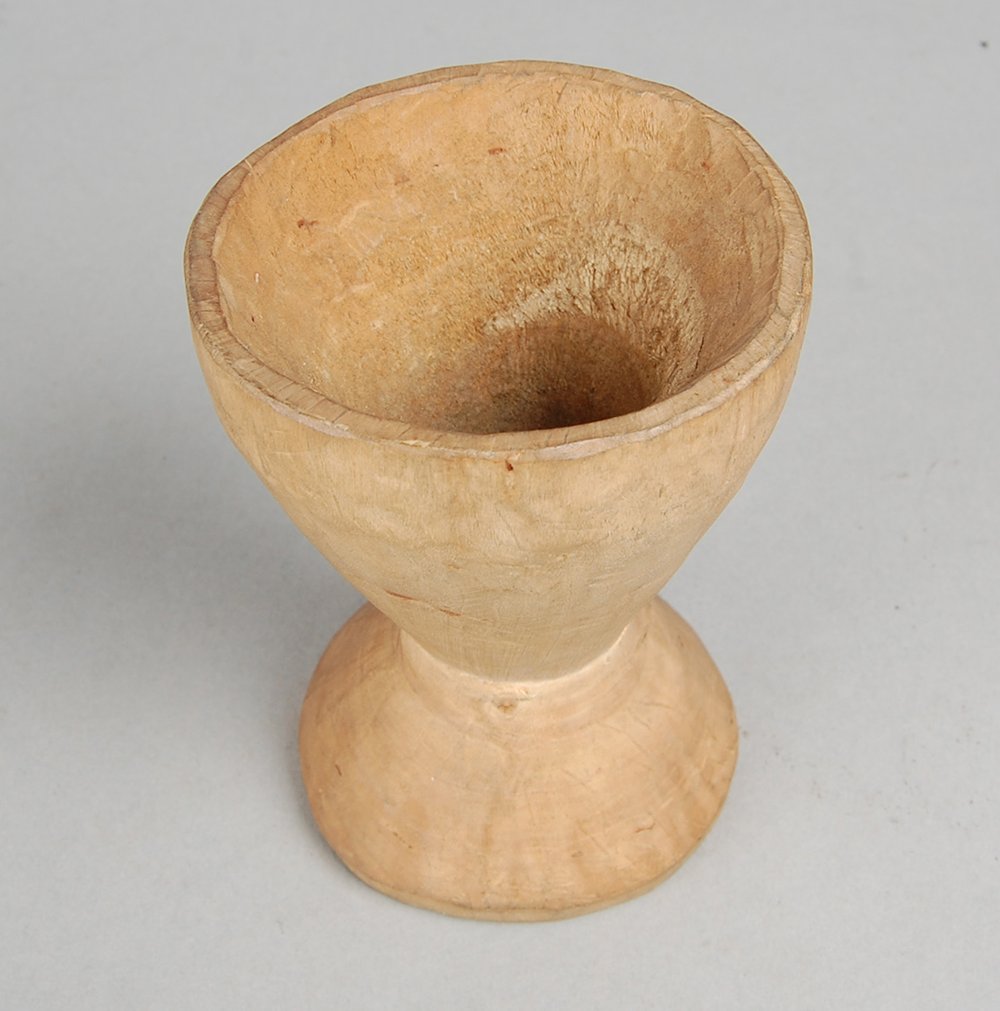
The Fowler Museum at UCLA holds a set of small carved wooden tools–a mortar, pestle, and hammer (Fig. 1). All items are from the Anthropology Department transfer in 1965, which attributes the dates of its objects to circa 1917, though this date is uncertain. With the mortar measuring 11 cm × 9 cm and the pestle and hammer no longer than 26.5 cm respectively, these tools are small, handheld items. The mortar has damage to the bottom of the bowl, though it is may be from bug damage.
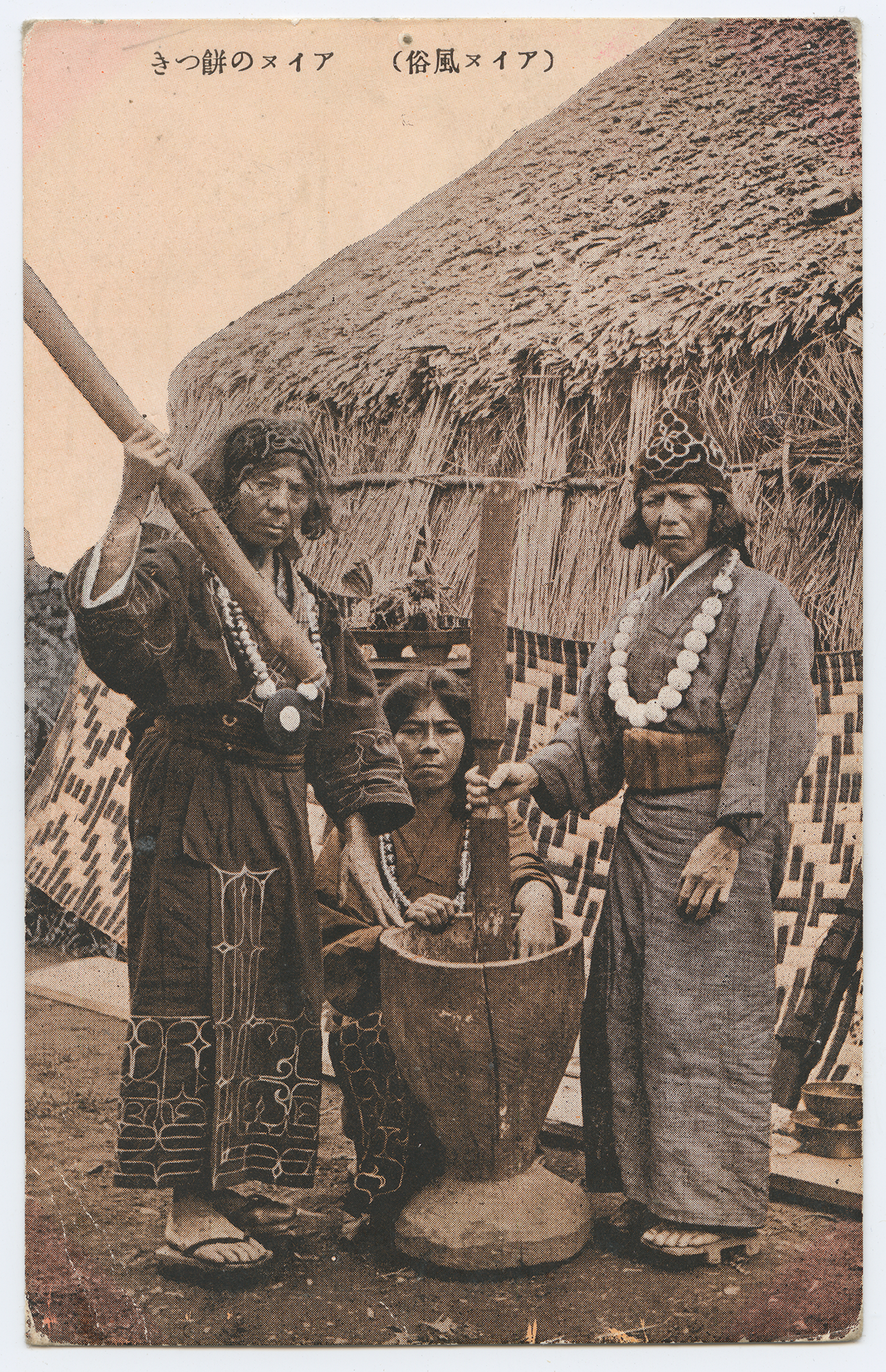
The size of these items suggests that they were more likely toys made for children, rather than functional everyday tools. Miniatures might be carved for Ainu children to play with, and our research has shown that the bow included in the Fowler’s holdings is likely also a child’s toy.1Miyuki Muraki, "Ainu Children's Play," in Ainu: Spirit of a Northern People, Fitzhugh William W. and Chisato O. Dubreuil, eds. (Arctic Studies Center, National Museum of Natural History, 1999), 246–247. Mortars and pestles were regularly used in Ainu communities, especially by women, for the grinding of millet, wheat, rice, and other necessities. These typically stood at about knee or waist level and might be used by multiple women at the same time (Fig. 2).
In the course of our research, we tended to see mortars with a taller base than the one seen in Figure 2. We checked to see if mortars and pestles were remarked upon in the books about Ainu written by Western travelers to Hokkaido and found that John Batchelor (1854–1944), a missionary to the Ainu writing in the 1890s, made an illustration resembling the object in our collection (Fig. 3), writing:
The mortar and pestle are also in common use in an Ainu hut. These instruments are home made, and each consists of a solid piece of wood. The mortar is used for threshing out wheat and millet, also for beating millet into flour and paste. This paste is used for making cakes for the special feasts. The pestle is held by the middle, so that it has really two ends.2John Batchelor, The Ainu of Japan: The Religion, Superstitions, and General History of the Hairy Aborigines of Japan (New York: Fleming H. Revell Company, 1892), 80
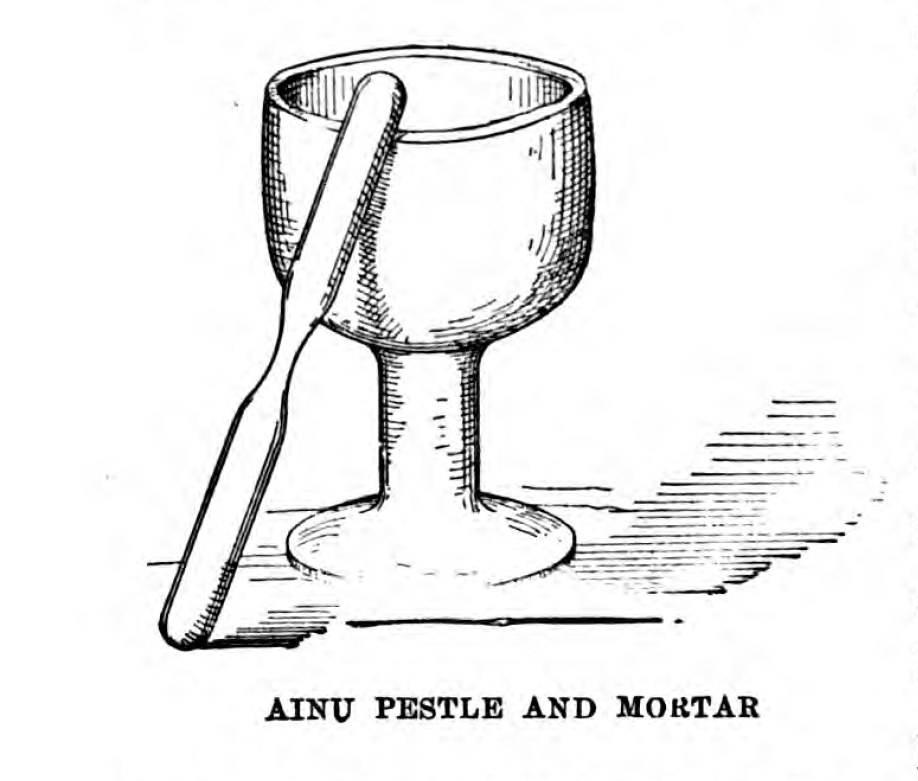
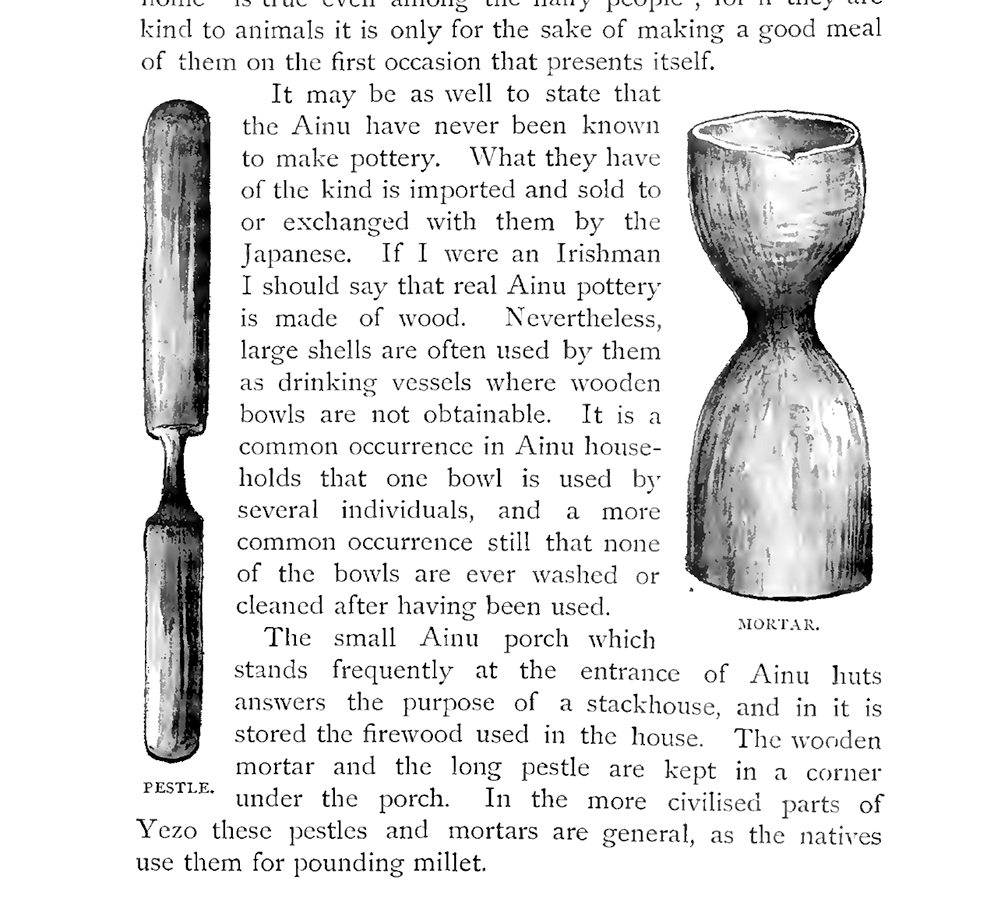
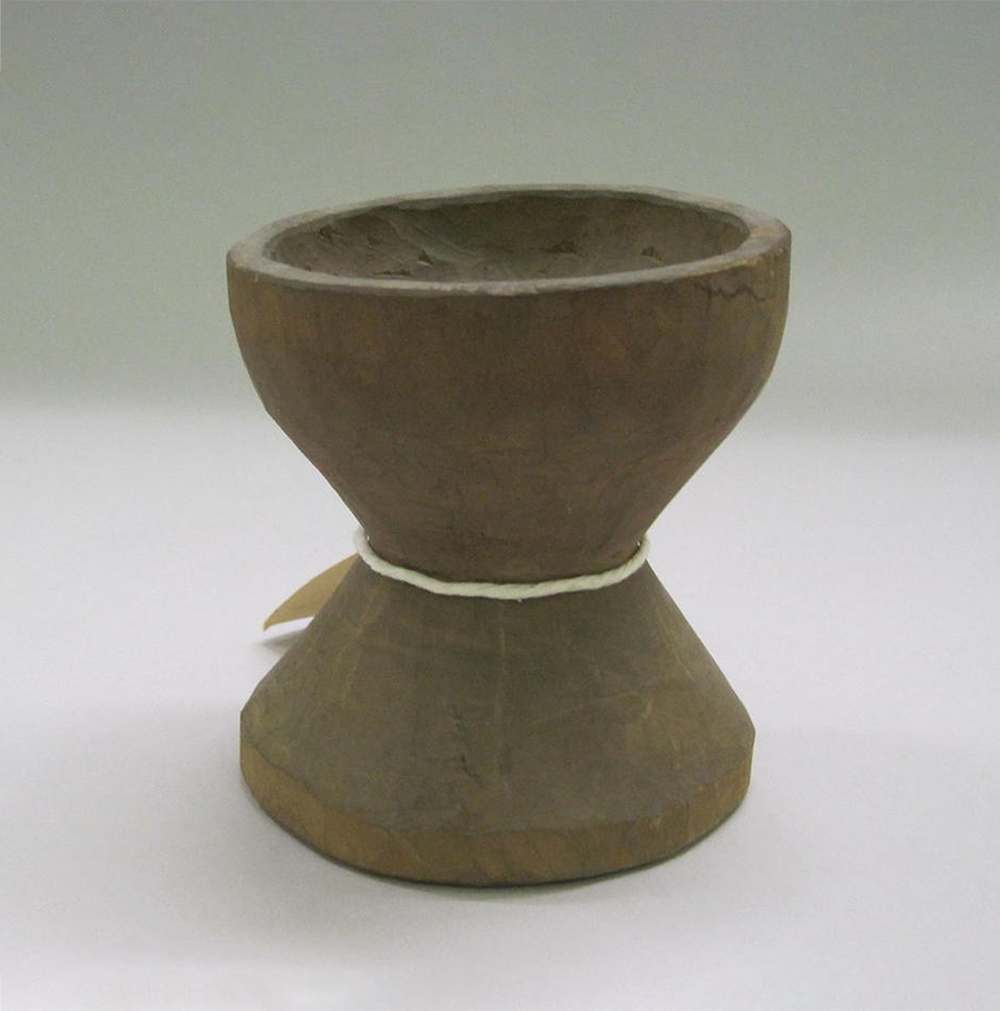
By contrast, a diagram from A.H. Savage Landor (1865–1924) appears closer to some of the larger mortars and pestles with which our team was familiar (Fig. 4).3A. H. Savage Landor, Alone with the Hairy Ainu, or, 3,800 Miles on a Pack Saddle in Yezo and a Cruise to the Kurile Islands (London: John Murray, 1893), 215. That said, the mortar in Figure 2 does more closely resemble our model, so it is unclear whether both shapes were regularly used or if what Batchelor sketched was a design reminiscent of a child’s toy, given that the neck of the mortar appears somewhat too thin to handle the stress of pounding grain. Notably, there are also examples of small wooden mortars in the collections of the British Museum (Fig. 5) and the Brooklyn Museum (Fig. 6), the former being identified as a “model,” and the latter a “toy mortar,” reinforcing our interpretation of the object in the Fowler Museum as likely a carved toy for children.
References
Batchelor, John. The Ainu of Japan: The Religion, Superstitions, and General History of the Hairy Aborigines of Japan. New York: Fleming H. Revell Company, 1892.
Landor, A. H. Savage. Alone with the Hairy Ainu, or, 3,800 Miles on a Pack Saddle in Yezo and a Cruise to the Kurile Islands. London: John Murray, 1893.
Muraki, Miyuki "Ainu Chilren's Play." In Ainu: Spirit of a Northern People. Edited by William W. Fitzhugh and Chisato O. Dubreuil, 246–247. Arctic Studies Center, National Museum of Natural History, 1999.