Ainu Collections
Many museums and archives around the world hold significant collections related to Ainu culture and history, some digitized and others only available in person. On this page we highlight the digitized manuscripts from UCLA’s collections (see our UCLA Holdings page for full details) as well as some of the institutions and websites where more Ainu-related historical materials are available.
UCLA Digital Collections


This illustrated manuscript, created in 1784 by Buddhist monk Gessen, depicts Chinese sages accompanied by Chinese poems. The dynamic figural style used in this manuscript was later used as a model for the artist Kakizaki Hakyō’s A Series of Paintings of Ainu Chieftains. This manuscript shows artistic influences across cultures and time periods that impacted artistic representations of the Ainu people.
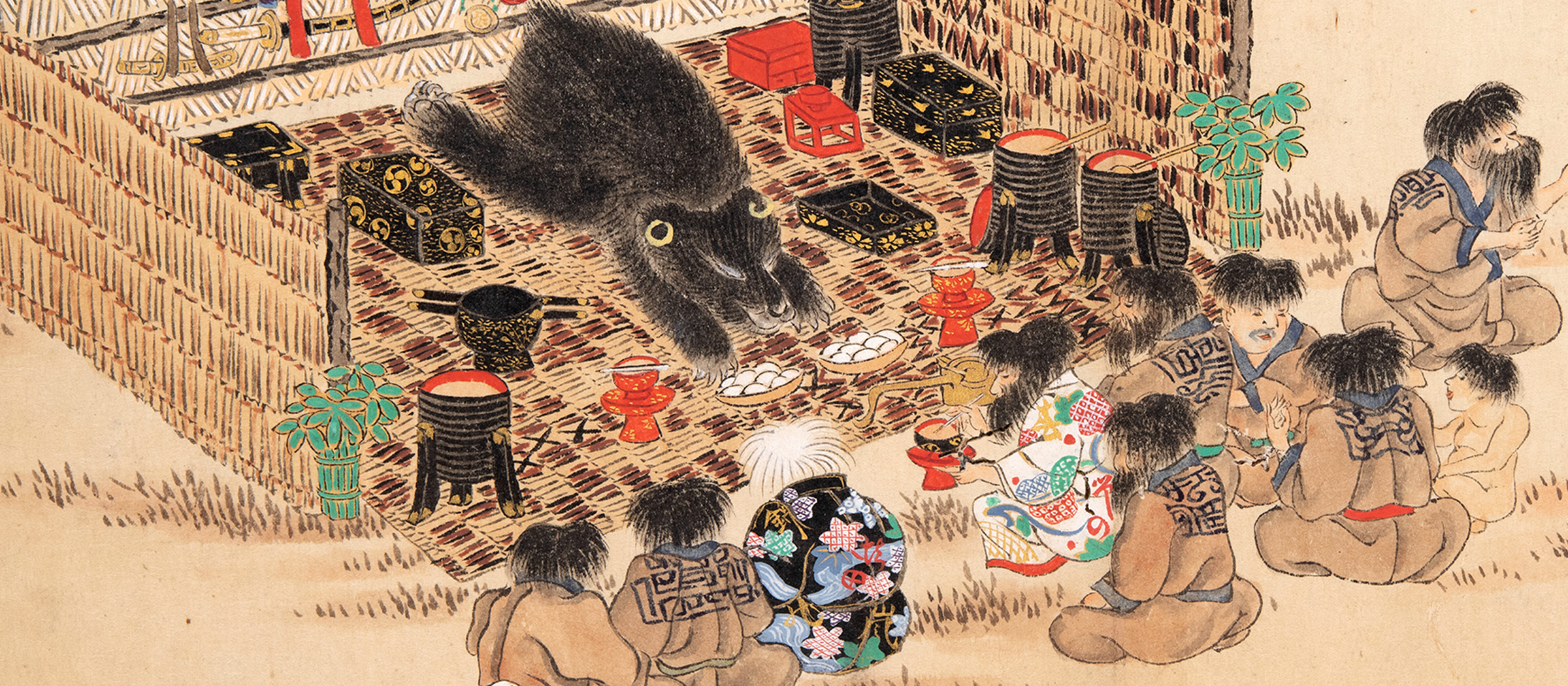
This 1798 illustrated handscroll created by Kodama Sadayoshi contains ethnographic drawings from the early modern period related to Ainu daily life. Accompanied by explanatory text and labels pasted into the scroll, it includes representations of Ainu ceremonies, clothing, tools, and interactions with Japanese officials. While some of the images reflect problematic and stereotyped representations of Ainu, it records important details of Ainu dress and ritual with some accuracy, such as the iyomante “sending back” bear ceremony.
Like the scroll above, this four-volume illustrated manuscript by Hata Awagimaru (a copy likely from 1804 or later), contains visual and textual descriptions of Ainu customs, ceremonies, and daily life in Hokkaido. The textual description takes precedence over illustrations in this volume, though the illustrations are done with great care. Notably, it also contains a volume that shows everyday life and practices for Japanese people living in the North of Japan during the late Edo period.
Significant Collections & Institutions
Japan

The National Ainu Museum, also known as Upopoy, is Japan’s first national museum dedicated specifically to Ainu culture and heritage. It is located in Shiraoi, Hokkaido and opened in 2020. The museum was opened as part of the broader national effort to recognize and preserve Ainu Indigenous culture. The collections combine historical artifact exhibitions with performances, reconstructed traditional architecture, language revitalization projects, and educational programs. The physical collections include ritual objects, everyday objects, textiles, carved wooden items, and oral histories written down. Upopoy centers Ainu voices and promotes the preservation of Ainu culture as both a tradition with deep historical roots and a contemporary community.
The Hokkaido Museum is dedicated to the history, environment, and indigenous cultures of Hokkaido. The collections include Ainu clothing, ceremonial tools, maps, historical documents, and daily life objects. The museum often hosts exhibitions and educational programs centered around Ainu culture, language and history with the Japanese and other nations. The museum not only looks at Ainu historical traditions but current living indigenous traditions, which helps to preserve and educate about indigenous cultural knowledge today.
The Bunka Cultural Heritage Online Collection features cultural heritage items of Japan’s Agency for Cultural Affairs and hosts a database that links digitally available images of collections from museums and institutions across Japan. The digital collections hold nearly 600 items related to Ainu, including textiles, clothing, ritual objects, tools, and more. The collection provides access to records across many different institutional entities, making it easier to search across Japan for Ainu cultural heritage.
The Hokkaido University Northern Studies Collection is a digital archive focusing specifically on northern people and cultures, including Ainu groups. The collection contains digital photographs, ethnographic records, and historical documents that mostly connect to the university’s research activities.
North America
The American Museum of Natural History preserves a variety of Ainu ethnographic materials, including clothing, textiles, hunting weapons, tools, ceremonial objects, and photographs. These materials reflect the museum’s interests in preserving indigenous cultures of Eastern Asia and the North Pacific regions. Over 200 items are available in their digital collections.
The Brooklyn Museum contains one of the largest online collections of Ainu materials outside of Japan, with 1,103 objects. In the digital collections, 793 of the records do not include digital images while 310 do. The holdings include textiles, garments, jewelry, tools, hunting weapons, ceremonial objects, and household items. The collection offers extensive visuals into Ainu traditions, spiritual beliefs, and everyday life actions.
The Field Museum holds 43 physical cataloged Ainu objects in its collections database although currently none of them contain digitized images. A large portion of the collection consists of clothing and textiles, alongside household objects like knives and swords.
The Lafayette Digital Repository of Lafayette College has a total of 201 items related to Ainu. They are all Japanese postcards, held in their East Asia Image Collection, that depict Ainu and people of the north. The dates range from approximately 1900 to 1945.
The Library of Congress holds a collection of roughly 100 titles related to Ainu culture and history (63 of which have been digitized and made freely available), including the Ainu and Ezochi Rare Collection consisting of Japanese manuscripts, maps, and illustrated books related to expeditions and ethnographic studies of Ainu and the North created during the eighteenth and nineteenth centuries.
The Penn Museum has a digital collections page dedicated to Hokkaido, with Ainu collections donated by Hiram M. Hiller Jr. in 1901. It currently has 400 records, including a wide variety of archaeological artifacts, textiles, everyday objects, and jewelry.
The Smithsonian Arctic Studies Center was established in 1988 and it is primarily a research institution conducting studies to do with northern and arctic cultures, covering indigenous communities, environments, and histories. The Arctic Studies Center hosted the exhibition Ainu: Spirit of the Northern People 1999–2000, which provides a critical source of information in English on Ainu history, culture, and practices from their beginnings to the modern day through objects and art.
The Smithsonian National Museum of Natural History holds 43 Ainu related objects inside the anthropology collection. The collection consists of clothing, tools, hunting weapons, and ritual objects collected during the late nineteenth and early twentieth centuries. Many records are available through the museum’s online database which includes catalog info for each object and images for select objects.
The University of Oregon has created a dedicated webpage documenting Ainu collections held across several of their campus museums and repositories. The collection includes physical artifacts, photographs, and ethnographic records all related to Ainu culture. They also provide access to collection information about each item and the website sets out to explain the history of how the materials in the collection were acquired and curated.
Europe
The British Museum has a large collection of 330 Ainu ethnographic and cultural materials. Their holdings include a variety of carved objects, textiles, jewelry,hunting tools, everyday items, and early modern and early twentieth-century artwork and photographs of Ainu. The British Museum’s collection is accessible digitally and in high resolution.
Collections from Colonial Contexts is a collaborative database that brings together information about ethnographic collections from colonial contexts that are held across German museums and institutions. A search for “Ainu” in the database links to over 100 items, including clothing, ritual objects, tools, and historical records. The database also includes provenance research and historical information on how the objects were collected.
The Horniman Museum & Gardens holds about 100 Ainu artifacts as a part of their world cultures collections. The online catalog includes clothing, textiles, everyday tools, and ritual objects, along with high resolution images and helpful descriptions.
The National Museum of Scotland holds a large collection of Japanese art and artifacts, including about 370 Ainu-related objects. 225 artifacts in the collection were donated by Neil Gordon Munro (1863–1942). These include textiles, ceremonial artifacts, weapons, lacquerware, and more. About 130 items in the collection have digital images available.
The Staatliche Museen Zu Berlin contains a large collection of Ainu material culture, with over 300 items available digitized on their website. The materials in the collection include clothing, textiles, ritual objects, tools, ornaments, and household items. Many of the objects are from the collections of Johan Adrian Jacobsen (1853–1947), a Norwegian ethnologist and explorer.